


One of the greatest dangers we face is that the longer we enjoy something good, the easier it becomes to forget how we received it, how much it meant to us, and what it takes to preserve that goodness for the future.
As Christians, we understand the importance of being thankful for the things God has given us. But have we ever stopped to consider why God emphasizes the importance of remembering His goodness throughout Scripture? What happens when we fail to remember the good things He has done for us?
Throughout Israel’s history, we see a recurring problem. The Israelites find themselves in difficult circumstances, so they turn to God in their time of need and experience His goodness again. However, after enjoying that goodness for some time, they would again start to question the importance of remaining faithful to Him. They wanted to continue enjoying the blessings God had given them without continuing to live by the principles He had given them.
Unfortunately, we too are susceptible to this same problem.
Why We Need to Remember God’s Goodness
In Psalm 78, Asaph spends much of the psalm recounting the things God had done throughout Israel’s history. However, in the opening verses, Asaph explains what he hopes to accomplish by reminding the Israelites of these things.
We will not hide them from their children, shewing to the generation to come the praises of the LORD, and his strength, and his wonderful works that he hath done.
Asaph identifies three things he wants to communicate to the next generation.
First, he wants to increase their gratitude toward God by teaching them to praise Him for what He has accomplished.
Second, he wants to increase their faith by demonstrating God’s power. We do not simply serve a God who has given us a set of moral principles. We serve a God who actively works in this world and has the power and authority to intervene in our lives.
Third, he wants to teach them about God’s attributes through the wonderful things He has done. Although we cannot physically see God, we can learn a great deal about His character through the actions He influences. We can see His patience, His faithfulness, His mercy, and His willingness to forgive us despite our shortcomings.
These are three things we should seek to accomplish whenever we take time to reflect upon God’s goodness. Our gratitude should increase our appreciation for His provision, strengthen our reliance upon Him, and remind us of the kind of God we serve.
The problem is that remembering these things requires intentional effort on our part. Remember, even David had to instruct his own soul not to forget what God had done for him.
Bless the LORD, O my soul, and forget not all his benefits.
When we read this verse, we might wonder how we could possibly forget everything God has done for us. But remember the many times you have found yourself in circumstances where you didn’t know how things would work out. Remember how you prayed about it, how God provided in ways you couldn’t have anticipated, and how you determined that the next time you found yourself in a difficult situation, you would trust God more.
Yet, when the next difficulty came, we found ourselves worrying about it just as much as we did the last time.
We must remember more than just what God is doing in our lives right now. We need to remember the difficulties He has already brought us through and let those experiences shape how we respond to our present circumstances.
The Danger of Having Everything We Need
Before the Israelites entered the Promised Land, God warned them about a particular danger they would encounter once they began enjoying the land He had given them, and it wasn’t their enemies. It was their comfort.
When thou hast eaten and art full, then thou shalt bless the LORD thy God for the good land which he hath given thee. Beware that thou forget not the LORD thy God, in not keeping his commandments, and his judgments, and his statutes, which I command thee this day: Lest when thou hast eaten and art full, and hast built goodly houses, and dwelt therein; And when thy herds and thy flocks multiply, and thy silver and thy gold is multiplied, and all that thou hast is multiplied; Then thine heart be lifted up, and thou forget the LORD thy God, which brought thee forth out of the land of Egypt, from the house of bondage.
— Deuteronomy 8:10–14
For forty years, the Israelites had lived in circumstances that continually reminded them of their need for God. But once they settled into their homes, gathered their harvests, and accumulated wealth, many of the difficulties that had encouraged them to depend upon God would no longer be there.
When we have everything we need physically, it becomes much easier to overlook what we need spiritually.
Notice how God specifically warns the Israelites against forgetting Him by failing to keep His commandments. The danger was not simply that they would forget to thank God for their food or their homes. The danger was that they would begin to see God’s commandments as unnecessary now that they had everything they wanted.
God goes on to warn them about the consequences.
As the nations which the LORD destroyeth before your face, so shall ye perish; because ye would not be obedient unto the voice of the LORD your God.
God was removing the inhabitants of Canaan because of their wickedness and giving the land to the Israelites. However, if the Israelites began practicing the same wickedness as the people who inhabited the land before them, they would eventually suffer the same consequences.
This principle extends beyond the nation of Israel. We are also unable to abandon the good principles that have produced good things in our lives and expect those good things to continue indefinitely.
This is not to say that everyone who lives a godly life will become financially prosperous or that every difficulty we encounter results from our own sin. Rather, it is to recognize that we can gradually destroy much of the good God has allowed us to enjoy by neglecting the responsibilities He has given us.
The Difficulty of Passing Down Gratitude
This problem becomes even more complicated when we begin passing our blessings on to our children.
Perhaps when you were younger, you struggled financially. There were months when you didn’t know whether or not you could pay all your bills. You may have had to ask your landlord for more time to pay your rent. You spent a great deal of time praying and asking God to provide for your needs.
Now, twenty or thirty years later, you haven’t had to worry about making a payment in years, and your children have grown up without experiencing any of those difficulties.
We thank God for lives of peace, but how then do you teach your children to appreciate God’s provision when they have never experienced the dire circumstances that taught you to appreciate it?
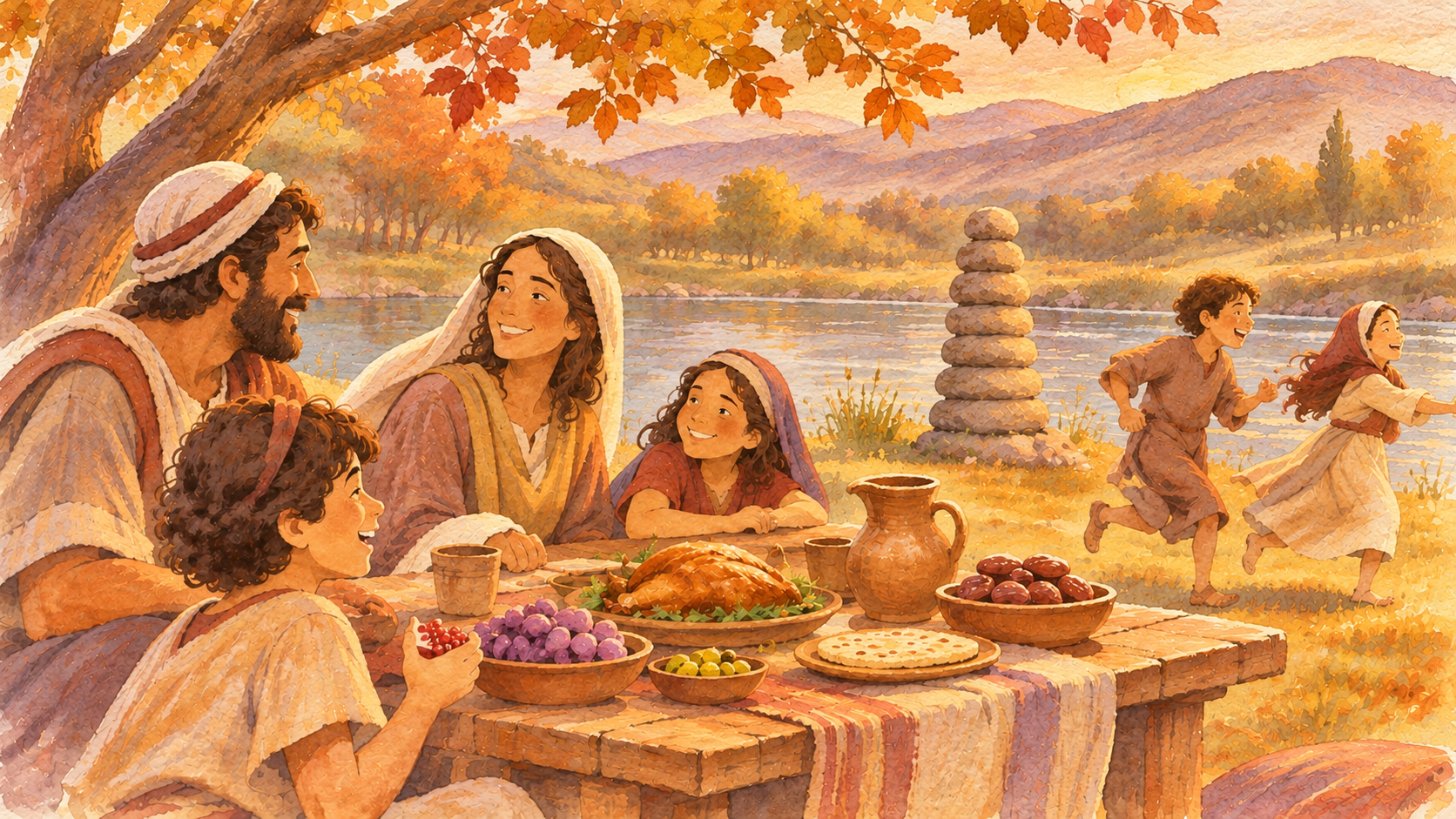
God knew the Israelites would face this challenge. In Joshua 4, after God miraculously brought the Israelites across the Jordan River, Joshua established a memorial of twelve stones.
When your children shall ask their fathers in time to come, saying, What mean these stones? Then ye shall let your children know, saying, Israel came over this Jordan on dry land.
— Joshua 4:21–22
Whenever an Israelite child asked his parents about these stones, it provided them with an opportunity to explain how God had brought their nation into the land that child now enjoyed. They could explain how God had divided the Jordan River for them, just as He had divided the Red Sea for their parents. It was an intentional effort to preserve an appreciation for God’s goodness from one generation to the next.
But was it enough?
In Judges 2:7, we read that the Israelites continued serving God throughout the lifetime of Joshua and the elders who had witnessed God’s great works. However, once that generation passed away, things changed.
And also all that generation were gathered unto their fathers: and there arose another generation after them, which knew not the LORD, nor yet the works which he had done for Israel. And the children of Israel did evil in the sight of the LORD, and served Baalim.
— Judges 2:10–11
The next generation inherited the Promised Land, but they did not inherit their parents’ faithfulness to God.
There is a difference between knowing how God has provided for someone else and learning to depend upon God yourself. The Israelites could tell their children about everything God had done for them, but their children also needed to develop a personal relationship with God that would give them a reason to remain faithful to Him after their parents were gone.
Giving Others Opportunities to Depend on God
As parents, when we can solve a problem for our children, it is tempting to do so. After all, many of us have worked hard so our children wouldn’t have to experience the same difficulties we did. However, as we work to provide a comfortable life for our children, we need to be careful not to deprive them of opportunities to learn to depend on God.
That doesn’t mean we should intentionally introduce unnecessary hardships into their lives. However, there are plenty of opportunities to practice our faith and step out of our comfort zone to depend on God. And those harder experiences come from simply doing what God has commanded us to do.
One of the best ways to teach our children to depend upon God is to involve them in serving Him. Get them involved in serving their church and their community. Give them opportunities to see the difficulties other people face, and let them participate in doing something to help ease those difficulties. And don’t forget this is something we need to be doing ourselves.
Sometimes we become so comfortable in our lives that we only serve God in ways that are convenient for us. We give when we know we have plenty to spare. We serve when we know we have plenty of time. We take on responsibilities when we are confident in our own ability to accomplish them. But if we only do things for God when we are confident we can accomplish them ourselves, how are we learning to rely upon Him?
We need to be willing to put ourselves in circumstances where fulfilling God’s will requires us to depend upon Him. There should be times in our Christian lives when we recognize that something needs to be done, that God wants us to do it, and that we need His help to accomplish it.
When our children see us living this way, and when we encourage them to do the same, they will have opportunities to experience God’s goodness that they would never have had if they simply spent their lives enjoying everything God had provided for us.
This brings us back to Asaph’s objective in Psalm 78.
That they might set their hope in God, and not forget the works of God, but keep his commandments.
Asaph did not simply want future generations to know about God. He wanted them to put their hope in God and to live according to His commandments.
Living Out Our Gratitude
In Psalm 116, the psalmist considers how to respond to everything God has done for him.
What shall I render unto the LORD for all his benefits toward me? I will take the cup of salvation, and call upon the name of the LORD. I will pay my vows unto the LORD now in the presence of all his people.
— Psalm 116:12–14
We can never repay God for all the grace, mercy, and compassion He has shown us. However, we can devote ourselves to serving Him in response.
When we thank God for the good things He has given us, we should also take time to consider whether we are still doing the good things He has commanded us to do. Are we as willing to serve Him now as we were when we were going through the difficulties He brought us out of? Has His provision encouraged us to trust Him more, or has it simply made us more comfortable relying upon ourselves?
Our desire to provide a better life for those who follow us should be accompanied by an equally strong desire to teach them how to live a godly life. It would be a shame to spend our entire lives building up blessings for our children without teaching them the principles that will enable them to preserve those blessings.
Rather than using the good things God has given us to make ourselves increasingly comfortable, let us use them to give ourselves and others greater opportunities to serve Him.
We should never let the goodness of God become the very thing that makes us forget our need for Him. So what are you doing to ensure that never happens?